
YTM32B1ME05 ADC不稳问题
已锁定
已解决
YTM32B1M系列
-
问题描述
最近在使用YTM32B1ME05的ADC模块时时遇到了一个问题,使用了ADC0和ADC1两个模块,固定通过eTMR的一个通道触发采集,周期大概在1ms,测试发现采集到的AD值会一直跳动,排查发现和切换TMU和ADC_CHSELx的配置有关系,请问下这里有什么需要注意和的地方吗?如何解决?
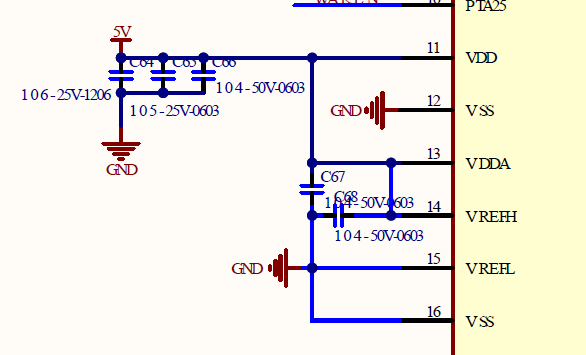
原理图 VREF:
不切换配置
void user_adc_start_conversion(void)
{
	tmu_target_module_t targetModule = TMU_TARGET_MODULE_ADC0_EXT_TRIG;

	/* Configure ADC channel selection based on PWM index */
	if(adcInst[UserAdcParams.pwmIndex][0] == ADC1_INST) {
//		ADC1->CHSEL[0] = adcInst[UserAdcParams.pwmIndex][1];
//        ADC1->CHSEL[1] = adcInst[UserAdcParams.pwmIndex][1];
//        ADC1->CHSEL[2] = adcInst[UserAdcParams.pwmIndex][1];
//        ADC1->CHSEL[3] = adcInst[UserAdcParams.pwmIndex][1];
//		targetModule = TMU_TARGET_MODULE_ADC1_EXT_TRIG;
	} else {
//		ADC0->CHSEL[0] = adcInst[UserAdcParams.pwmIndex][1];
//        ADC0->CHSEL[1] = adcInst[UserAdcParams.pwmIndex][1];
//        ADC0->CHSEL[2] = adcInst[UserAdcParams.pwmIndex][1];
//        ADC0->CHSEL[3] = adcInst[UserAdcParams.pwmIndex][1];
//		targetModule = TMU_TARGET_MODULE_ADC0_EXT_TRIG;
	}

	/* Update TMU target module directly without reinitializing entire TMU
	 * This is more efficient than TMU_DRV_Init which resets all target modules
	 */
    TMU->MUX[3] = 0;
    TMU->MUX[4] = 0;
    TMU_SetTrigSourceForTargetModule(TMU, TMU_TRIG_SOURCE_eTMR0_EXT_TRIG, targetModule);
}
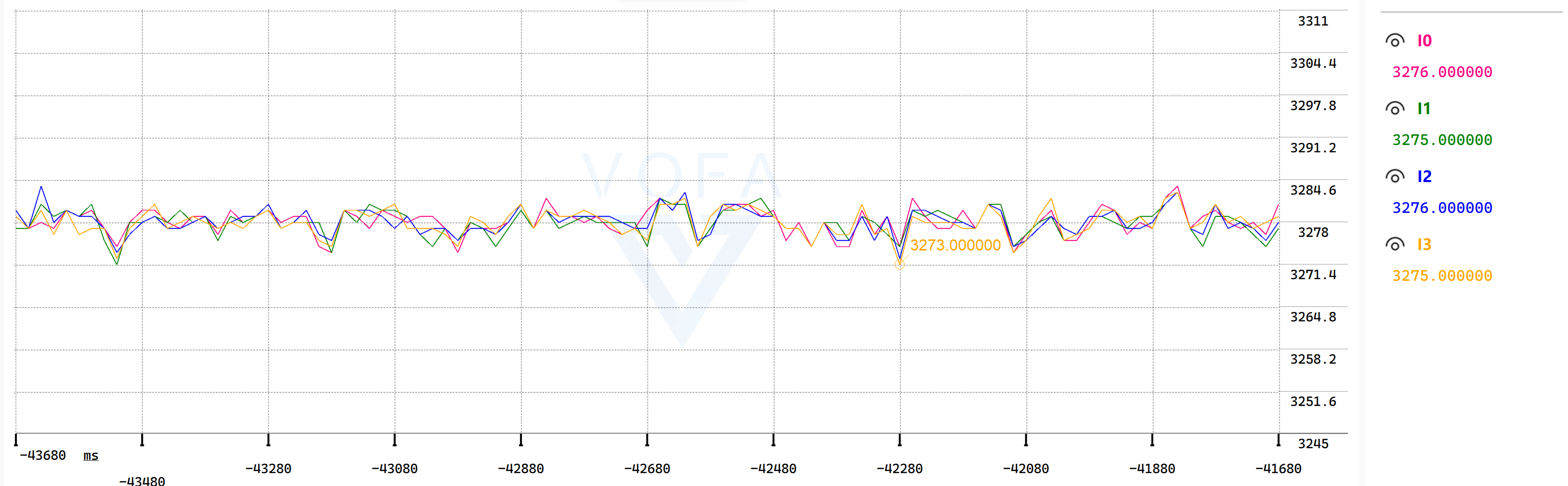
结果如图,基本在2938~2948之内,波动比较小
周期切换TMU
void user_adc_start_conversion(void)
{
	tmu_target_module_t targetModule = TMU_TARGET_MODULE_ADC0_EXT_TRIG;

	/* Configure ADC channel selection based on PWM index */
	if(adcInst[UserAdcParams.pwmIndex][0] == ADC1_INST) {
//		ADC1->CHSEL[0] = adcInst[UserAdcParams.pwmIndex][1];
//        ADC1->CHSEL[1] = adcInst[UserAdcParams.pwmIndex][1];
//        ADC1->CHSEL[2] = adcInst[UserAdcParams.pwmIndex][1];
//        ADC1->CHSEL[3] = adcInst[UserAdcParams.pwmIndex][1];
		targetModule = TMU_TARGET_MODULE_ADC1_EXT_TRIG;
	} else {
//		ADC0->CHSEL[0] = adcInst[UserAdcParams.pwmIndex][1];
//        ADC0->CHSEL[1] = adcInst[UserAdcParams.pwmIndex][1];
//        ADC0->CHSEL[2] = adcInst[UserAdcParams.pwmIndex][1];
//        ADC0->CHSEL[3] = adcInst[UserAdcParams.pwmIndex][1];
		targetModule = TMU_TARGET_MODULE_ADC0_EXT_TRIG;
	}

	/* Update TMU target module directly without reinitializing entire TMU
	 * This is more efficient than TMU_DRV_Init which resets all target modules
	 */
    TMU->MUX[3] = 0;
    TMU->MUX[4] = 0;
    TMU_SetTrigSourceForTargetModule(TMU, TMU_TRIG_SOURCE_eTMR0_EXT_TRIG, targetModule);
}
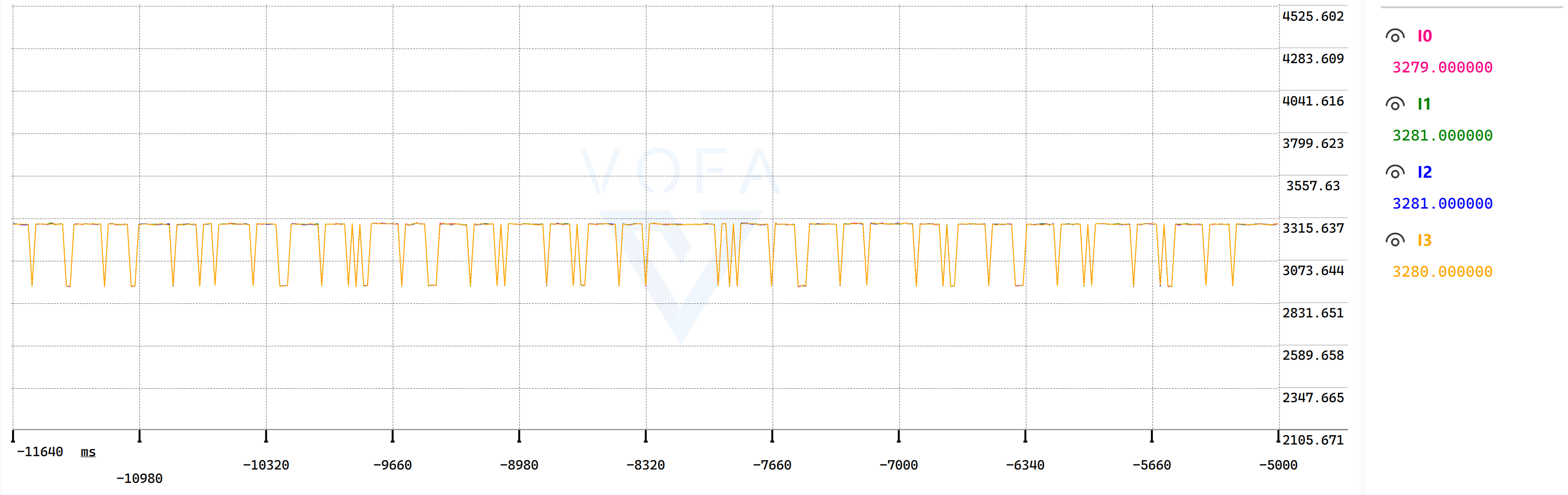
结果如图
周期切换ADC通道
注意通道0和1不切换,只切换2和3
void user_adc_start_conversion(void)
{
	tmu_target_module_t targetModule = TMU_TARGET_MODULE_ADC1_EXT_TRIG;

	/* Configure ADC channel selection based on PWM index */
	if(adcInst[UserAdcParams.pwmIndex][0] == ADC1_INST) {
//		ADC1->CHSEL[0] = adcInst[UserAdcParams.pwmIndex][1];
//        ADC1->CHSEL[1] = adcInst[UserAdcParams.pwmIndex][1];
        ADC1->CHSEL[2] = adcInst[UserAdcParams.pwmIndex][1];
        ADC1->CHSEL[3] = adcInst[UserAdcParams.pwmIndex][1];
		targetModule = TMU_TARGET_MODULE_ADC1_EXT_TRIG;
	} else {
//		ADC0->CHSEL[0] = adcInst[UserAdcParams.pwmIndex][1];
//        ADC0->CHSEL[1] = adcInst[UserAdcParams.pwmIndex][1];
        ADC0->CHSEL[2] = adcInst[UserAdcParams.pwmIndex][1];
        ADC0->CHSEL[3] = adcInst[UserAdcParams.pwmIndex][1];
		targetModule = TMU_TARGET_MODULE_ADC0_EXT_TRIG;
	}

	/* Update TMU target module directly without reinitializing entire TMU
	 * This is more efficient than TMU_DRV_Init which resets all target modules
	 */
    TMU->MUX[3] = 0;
    TMU->MUX[4] = 0;
    TMU_SetTrigSourceForTargetModule(TMU, TMU_TRIG_SOURCE_eTMR0_EXT_TRIG, targetModule);
}
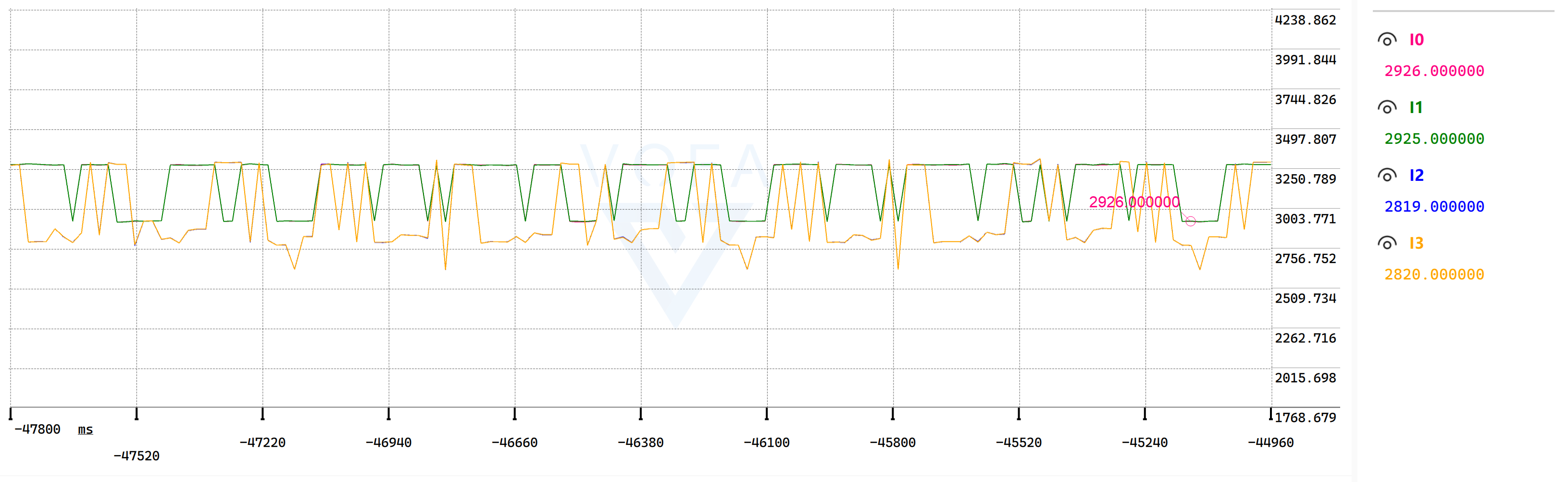
结果如图,抖动的比较厉害
用到的函数
/** * @brief Print latest ADC samples in JustFloat-like format */ void user_adc_print_samples(void) { uint8_t frame[4U * sizeof(float) + 4U]; uint32_t offset = 0U; if(!sendFlag) { return; } sendFlag = false; for(uint8_t idx = 0U; idx < 4U; idx++) { float f = (float)adcSapleResult[idx]; (void)memcpy(&frame[offset], &f, sizeof(float)); offset += (uint32_t)sizeof(float); } (void)memcpy(&frame[offset], c_justfloat_tail, sizeof(c_justfloat_tail)); offset += (uint32_t)sizeof(c_justfloat_tail); /* Send with LINFlexD UART polling, instance = 2 */ LINFlexD_UART_DRV_SendDataPolling(2U, frame, offset); } /** * @brief ADC0 interrupt handler * @return none */ void ADC0_IRQHandler(void) { ADC_DRV_ClearEoseqFlagCmd(0); adcSapleResult[0] = ADC_DRV_ReadFIFO(0); adcSapleResult[1] = ADC_DRV_ReadFIFO(0); adcSapleResult[2] = ADC_DRV_ReadFIFO(0); adcSapleResult[3] = ADC_DRV_ReadFIFO(0); adcSapleSum = adcSapleResult[0] + adcSapleResult[1] + adcSapleResult[2] + adcSapleResult[3]; updateAdcResult(adcSapleSum >> 2); UserAdcParams.boardSupplyVolt.rawAdcValue = ADC_DRV_ReadFIFO(0); UserAdcParams.ledSupplyVolt.rawAdcValue = ADC_DRV_ReadFIFO(0); } /** * @brief ADC1 interrupt handler * @return none */ void ADC1_IRQHandler(void) { ADC_DRV_ClearEoseqFlagCmd(1); adcSapleResult[0] = ADC_DRV_ReadFIFO(1); adcSapleResult[1] = ADC_DRV_ReadFIFO(1); adcSapleResult[2] = ADC_DRV_ReadFIFO(1); adcSapleResult[3] = ADC_DRV_ReadFIFO(1); adcSapleSum = adcSapleResult[0] + adcSapleResult[1] + adcSapleResult[2] + adcSapleResult[3]; updateAdcResult(adcSapleSum >> 2); sendFlag = true; } -
@quanfeng 忘记说了,下午重新验证了下,发现并没有通道错位情况,数据还是一样波动比较大。
代码如下:
/**
 * @brief ADC0 interrupt handler
 * @return none
 */
void ADC0_IRQHandler(void)
{
    uint32_t adcSampleSum = 0U;
    uint8_t expectedChannel = adcInst[UserAdcParams.pwmIndex][1];
    uint8_t validCnt = 0U;

    ADC_DRV_ClearEoseqFlagCmd(0);
    adcSampleSum = 0U;

	for(uint8_t readCnt = 0U; readCnt < 8U; readCnt++) {
        adcSampleResult[readCnt].u32DualWord = ADC0->FIFO;
        if(readCnt < 4U)
        {
            if(adcSampleResult[readCnt].parts.u16ChnIndex == expectedChannel) {
                adcSampleSum += adcSampleResult[readCnt].parts.u16ChnResult;
                validCnt++;
            } else {
                misMatchFlag = true;
            }
        }

    }

    if (validCnt > 0U) {
        updateAdcResult((uint16_t)(adcSampleSum / validCnt));
    } else {
        updateAdcResult(0x8000);
    }


    if(adcSampleResult[4].parts.u16ChnIndex == ADC_INPUTCHAN_EXT17) {
        UserAdcParams.boardSupplyVolt.rawAdcValue = adcSampleResult[4].parts.u16ChnResult;
    }else{
        misMatchFlag = true;
    }
    if(adcSampleResult[5].parts.u16ChnIndex == ADC_INPUTCHAN_EXT18) {
        UserAdcParams.ledSupplyVolt.rawAdcValue = adcSampleResult[5].parts.u16ChnResult;
    }else{
        misMatchFlag = true;
    }
}

/**
 * @brief ADC1 interrupt handler
 * @return none
 */
void ADC1_IRQHandler(void)
{
    uint32_t adcSampleSum = 0U;
    uint8_t expectedChannel = adcInst[UserAdcParams.pwmIndex][1];
    uint8_t validCnt = 0U;

    ADC_DRV_ClearEoseqFlagCmd(1);
    for(uint8_t readCnt = 0U; readCnt < 8U; readCnt++) {
        adcSampleResult[readCnt].u32DualWord = ADC1->FIFO;
        if(readCnt < 4U){
            if(adcSampleResult[readCnt].parts.u16ChnIndex == expectedChannel) {
                adcSampleSum += adcSampleResult[readCnt].parts.u16ChnResult;
                validCnt++;
            } else {
                misMatchFlag = true;
            }
        }
    }
    if (validCnt > 0U) {
        updateAdcResult((uint16_t)(adcSampleSum / validCnt));
    } else {
        updateAdcResult(0x8000);
    }
}
进不到misMatchFlag 为true情况,采集到的数据波动比较大。

-
@quanfeng 我使用的硬件触发,然后只打开了EOS中断,在中断中执行,也会出现这种情况吗?
-
在ADC中断中每次读8次FIFO可以解决
-
@quanfeng 忘记说了,下午重新验证了下,发现并没有通道错位情况,数据还是一样波动比较大。
代码如下:
/**
 * @brief ADC0 interrupt handler
 * @return none
 */
void ADC0_IRQHandler(void)
{
    uint32_t adcSampleSum = 0U;
    uint8_t expectedChannel = adcInst[UserAdcParams.pwmIndex][1];
    uint8_t validCnt = 0U;

    ADC_DRV_ClearEoseqFlagCmd(0);
    adcSampleSum = 0U;

	for(uint8_t readCnt = 0U; readCnt < 8U; readCnt++) {
        adcSampleResult[readCnt].u32DualWord = ADC0->FIFO;
        if(readCnt < 4U)
        {
            if(adcSampleResult[readCnt].parts.u16ChnIndex == expectedChannel) {
                adcSampleSum += adcSampleResult[readCnt].parts.u16ChnResult;
                validCnt++;
            } else {
                misMatchFlag = true;
            }
        }

    }

    if (validCnt > 0U) {
        updateAdcResult((uint16_t)(adcSampleSum / validCnt));
    } else {
        updateAdcResult(0x8000);
    }


    if(adcSampleResult[4].parts.u16ChnIndex == ADC_INPUTCHAN_EXT17) {
        UserAdcParams.boardSupplyVolt.rawAdcValue = adcSampleResult[4].parts.u16ChnResult;
    }else{
        misMatchFlag = true;
    }
    if(adcSampleResult[5].parts.u16ChnIndex == ADC_INPUTCHAN_EXT18) {
        UserAdcParams.ledSupplyVolt.rawAdcValue = adcSampleResult[5].parts.u16ChnResult;
    }else{
        misMatchFlag = true;
    }
}

/**
 * @brief ADC1 interrupt handler
 * @return none
 */
void ADC1_IRQHandler(void)
{
    uint32_t adcSampleSum = 0U;
    uint8_t expectedChannel = adcInst[UserAdcParams.pwmIndex][1];
    uint8_t validCnt = 0U;

    ADC_DRV_ClearEoseqFlagCmd(1);
    for(uint8_t readCnt = 0U; readCnt < 8U; readCnt++) {
        adcSampleResult[readCnt].u32DualWord = ADC1->FIFO;
        if(readCnt < 4U){
            if(adcSampleResult[readCnt].parts.u16ChnIndex == expectedChannel) {
                adcSampleSum += adcSampleResult[readCnt].parts.u16ChnResult;
                validCnt++;
            } else {
                misMatchFlag = true;
            }
        }
    }
    if (validCnt > 0U) {
        updateAdcResult((uint16_t)(adcSampleSum / validCnt));
    } else {
        updateAdcResult(0x8000);
    }
}
进不到misMatchFlag 为true情况,采集到的数据波动比较大。
-
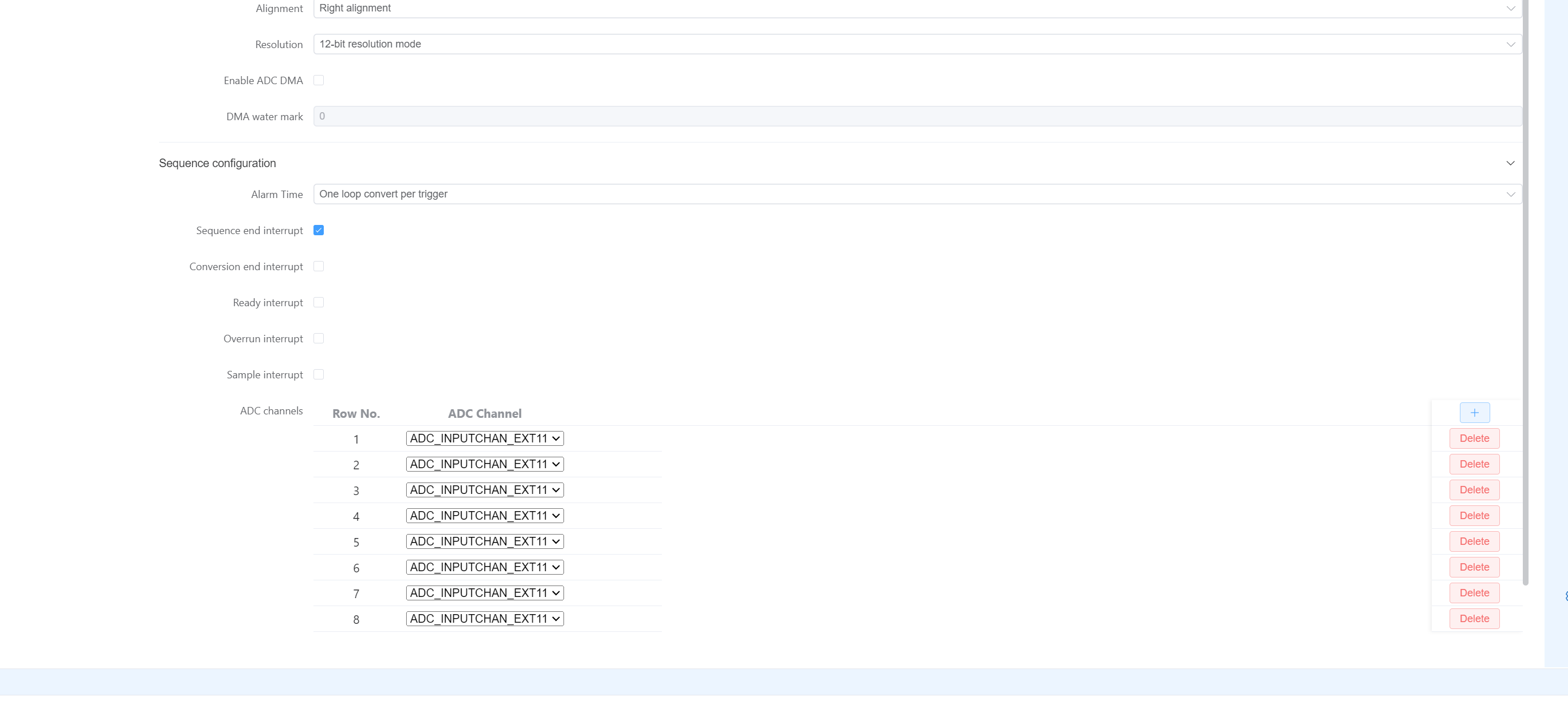
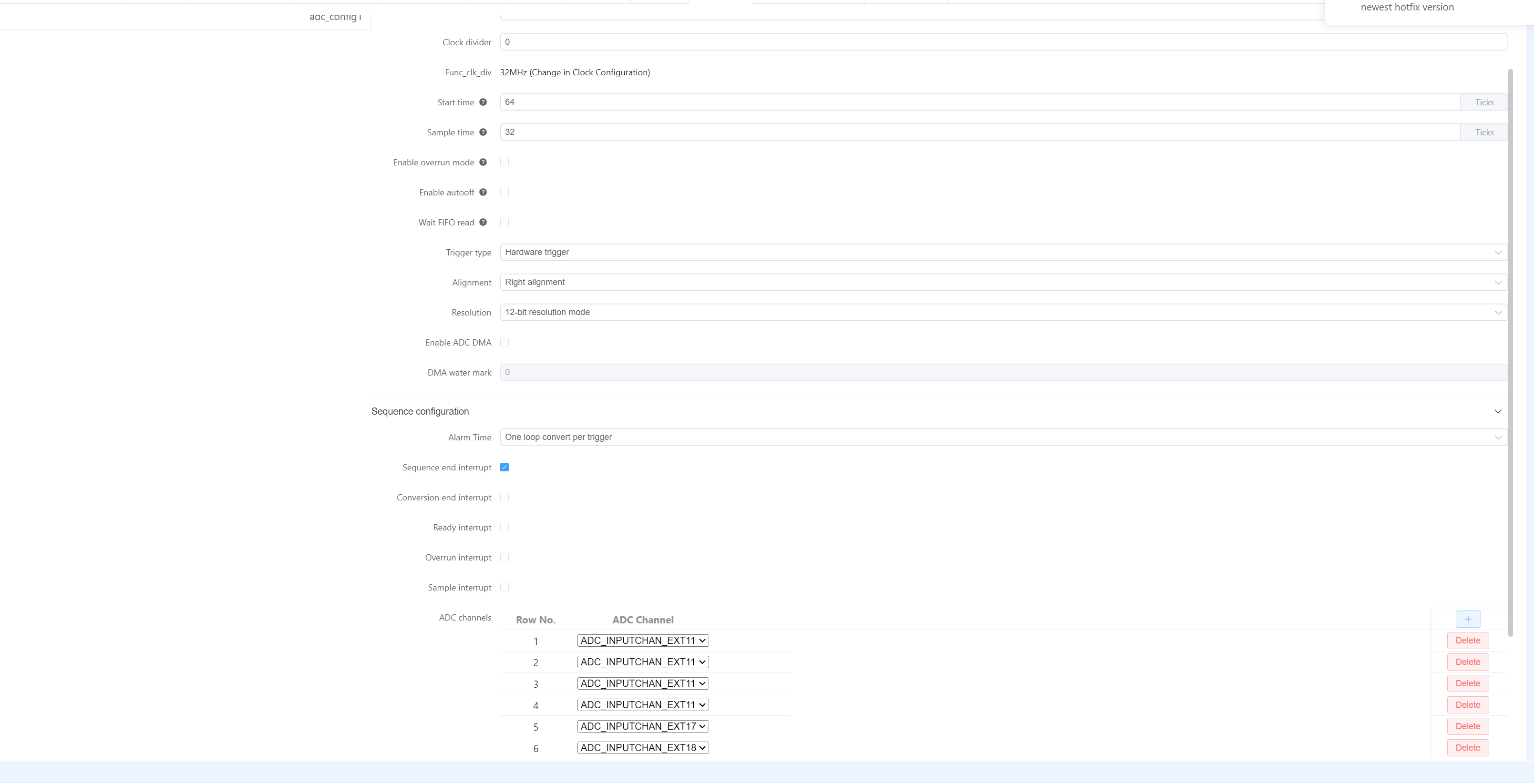
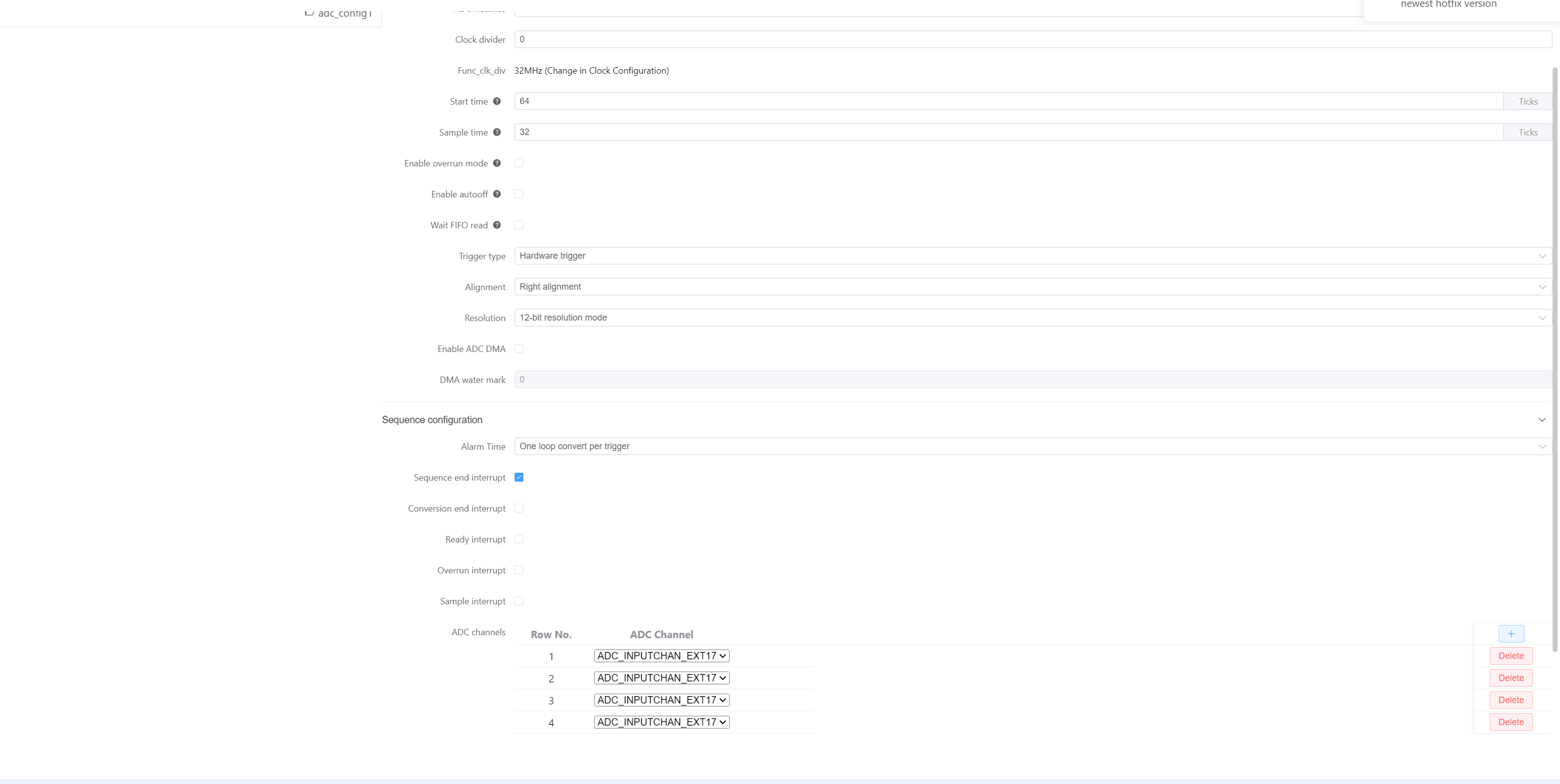
ADC0配置:
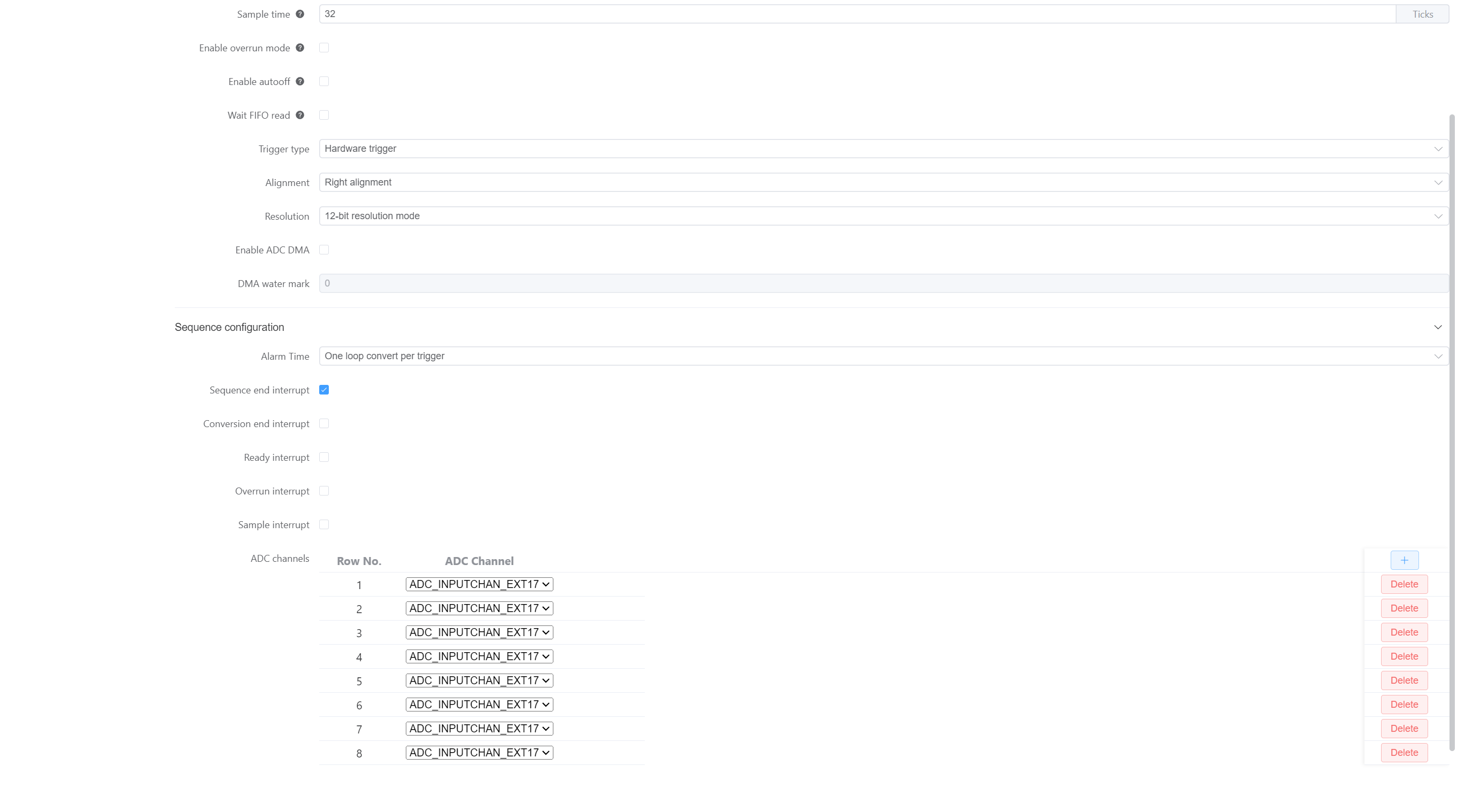
ADC1配置
代码
void user_adc_start_conversion(void)
{
	tmu_target_module_t targetModule = TMU_TARGET_MODULE_ADC1_EXT_TRIG;

	/* Configure ADC channel selection based on PWM index */
	if(adcInst[UserAdcParams.pwmIndex][0] == ADC1_INST) {
//		ADC1->CHSEL[0] = adcInst[UserAdcParams.pwmIndex][1];
//        ADC1->CHSEL[1] = adcInst[UserAdcParams.pwmIndex][1];
//        ADC1->CHSEL[2] = adcInst[UserAdcParams.pwmIndex][1];
//        ADC1->CHSEL[3] = adcInst[UserAdcParams.pwmIndex][1];
		targetModule = TMU_TARGET_MODULE_ADC1_EXT_TRIG;
	} else {
//		ADC0->CHSEL[0] = adcInst[UserAdcParams.pwmIndex][1];
//        ADC0->CHSEL[1] = adcInst[UserAdcParams.pwmIndex][1];
//        ADC0->CHSEL[2] = adcInst[UserAdcParams.pwmIndex][1];
//        ADC0->CHSEL[3] = adcInst[UserAdcParams.pwmIndex][1];
		targetModule = TMU_TARGET_MODULE_ADC0_EXT_TRIG;
	}

	/* Update TMU target module directly without reinitializing entire TMU
	 * This is more efficient than TMU_DRV_Init which resets all target modules
	 */
    TMU->MUX[3] = 0;
    TMU->MUX[4] = 0;
    TMU_SetTrigSourceForTargetModule(TMU, TMU_TRIG_SOURCE_eTMR0_EXT_TRIG, targetModule);
}
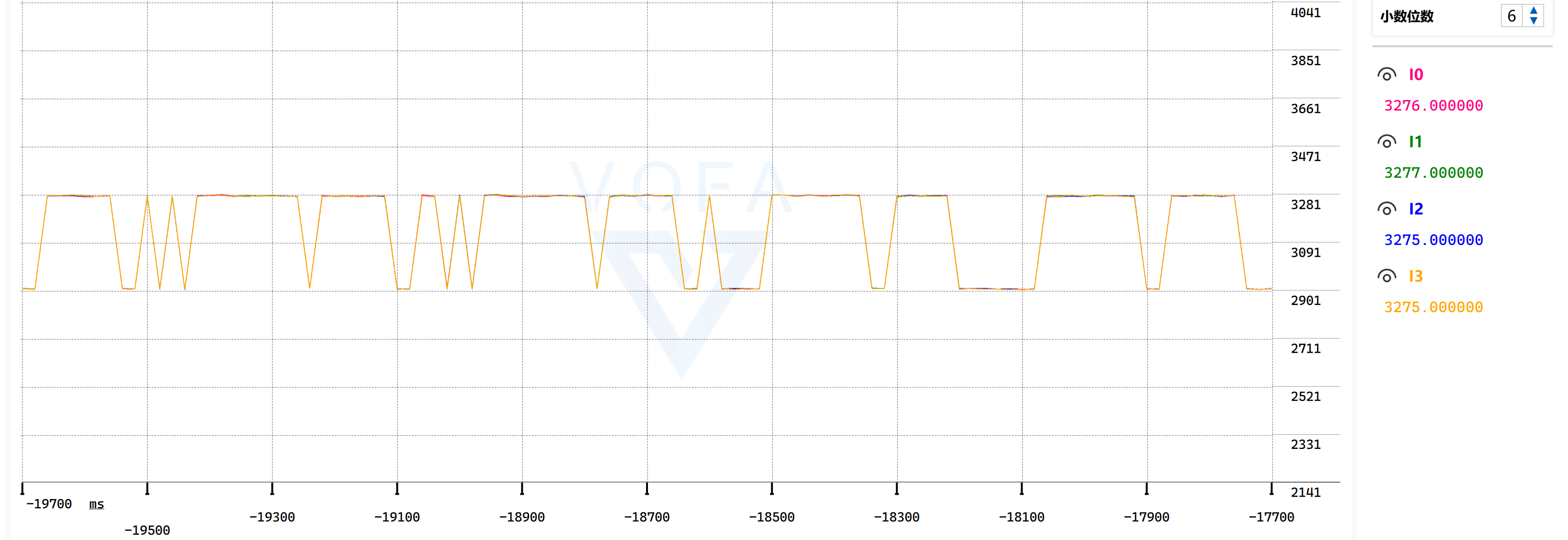
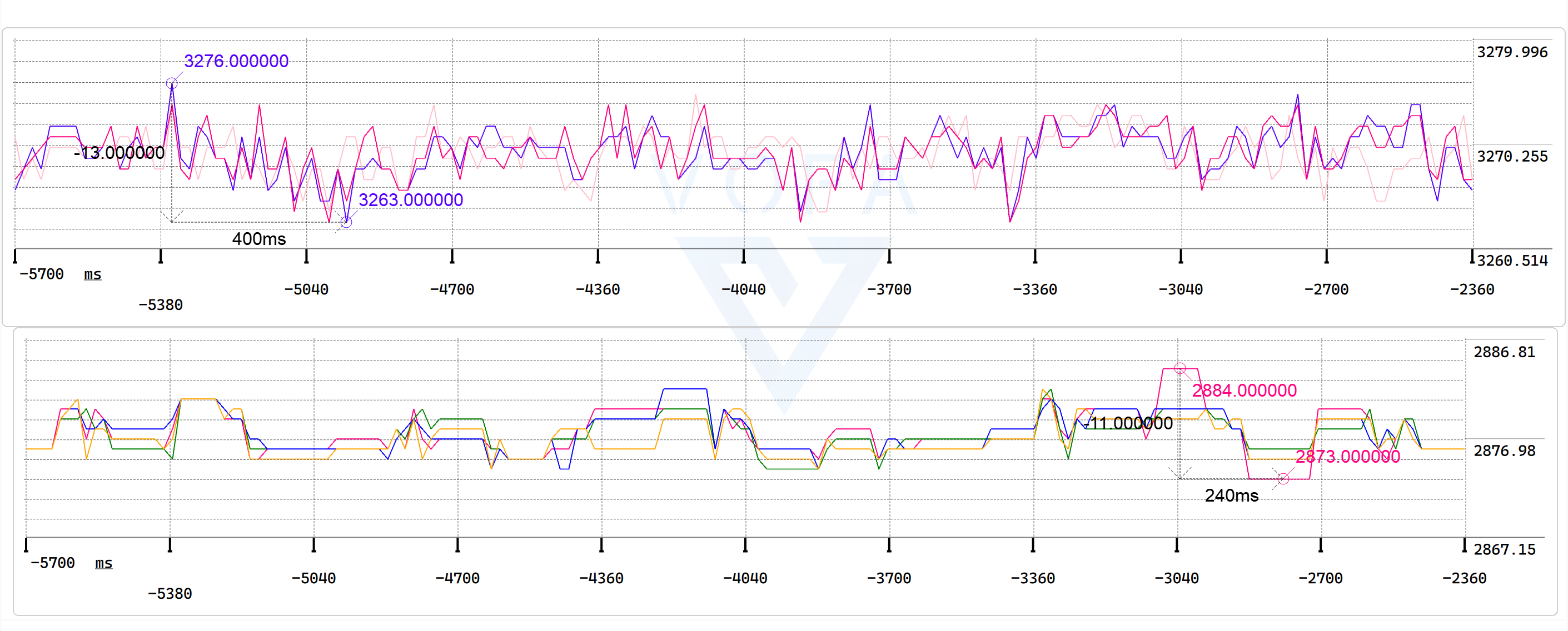
结果如下
-
F Frankie 将这个主题转为问答主题,在
-



快速上手云途开发生态
发帖前请查看
帮助改进和优化YT CONFIG TOOL,有机会抽取YTM32B1ME0 EVB哦...
